
Premium leather interior, paddle shifters, and a street-driven cabin that still matters for long trips.
Projects
The Cajun Mojave Project
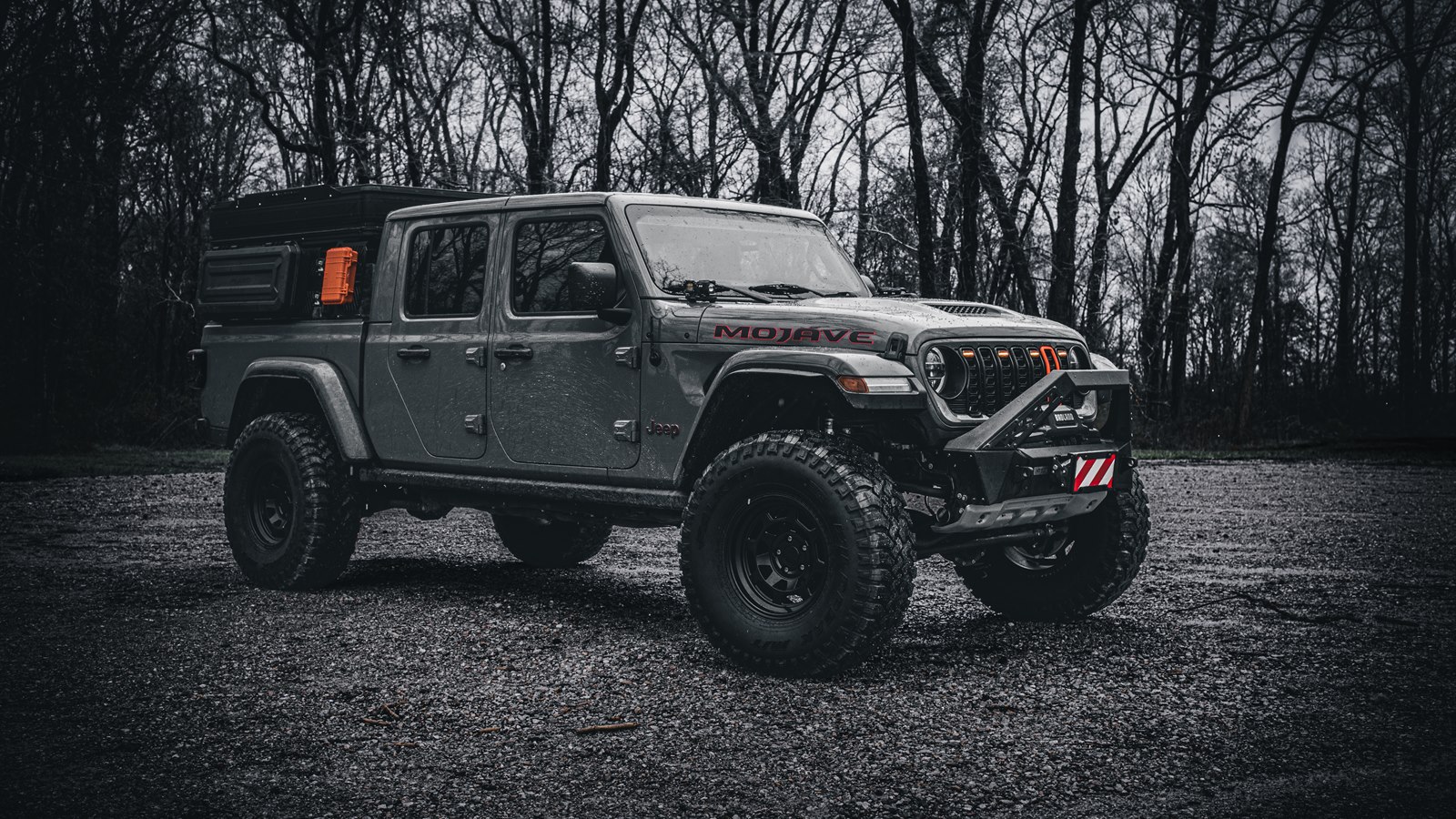
A living build journal for my 2021 Jeep Gladiator Mojave being developed for long-distance travel, serious trail use, and stronger supporting systems.
Project Introduction
A build journal for where the Gladiator is headed
The Cajun Mojave Project documents the evolution of my 2021 Jeep Gladiator Mojave from a capable factory platform into a stronger, long-distance, street-driven trail vehicle.
The point is not to install the largest possible parts. The point is to build the supporting systems correctly: axles, steering, tires, wheels, driveshafts, braking, payload, lighting, communications, camping gear, and eventually the powertrain. Reliability, road manners, serviceability, and intentional engineering matter as much as raw capability.
Current State
The Jeep as it sits now
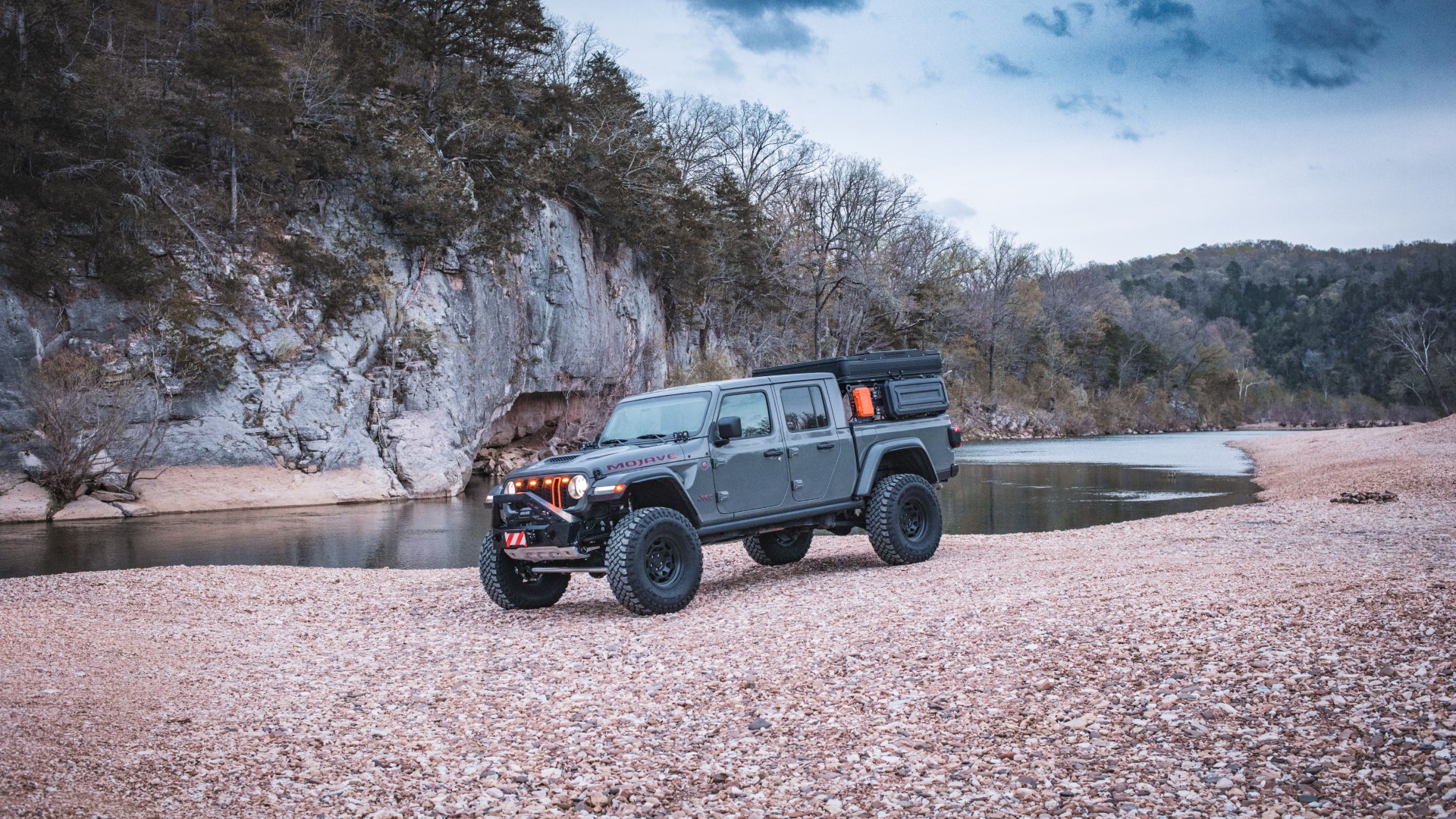
The current setup is already carrying real travel and trail weight, which is why the next phase is being planned around the whole vehicle instead of one isolated upgrade.
The suspension includes the rear Y-link style setup and currently supports the Jeep on 38-inch tires.
Permanent and typical carried gear affect ride height, handling, braking, and how future parts are selected.
The Jeep carries recovery gear including a bottle jack, breaker bar, and kinetic rope.
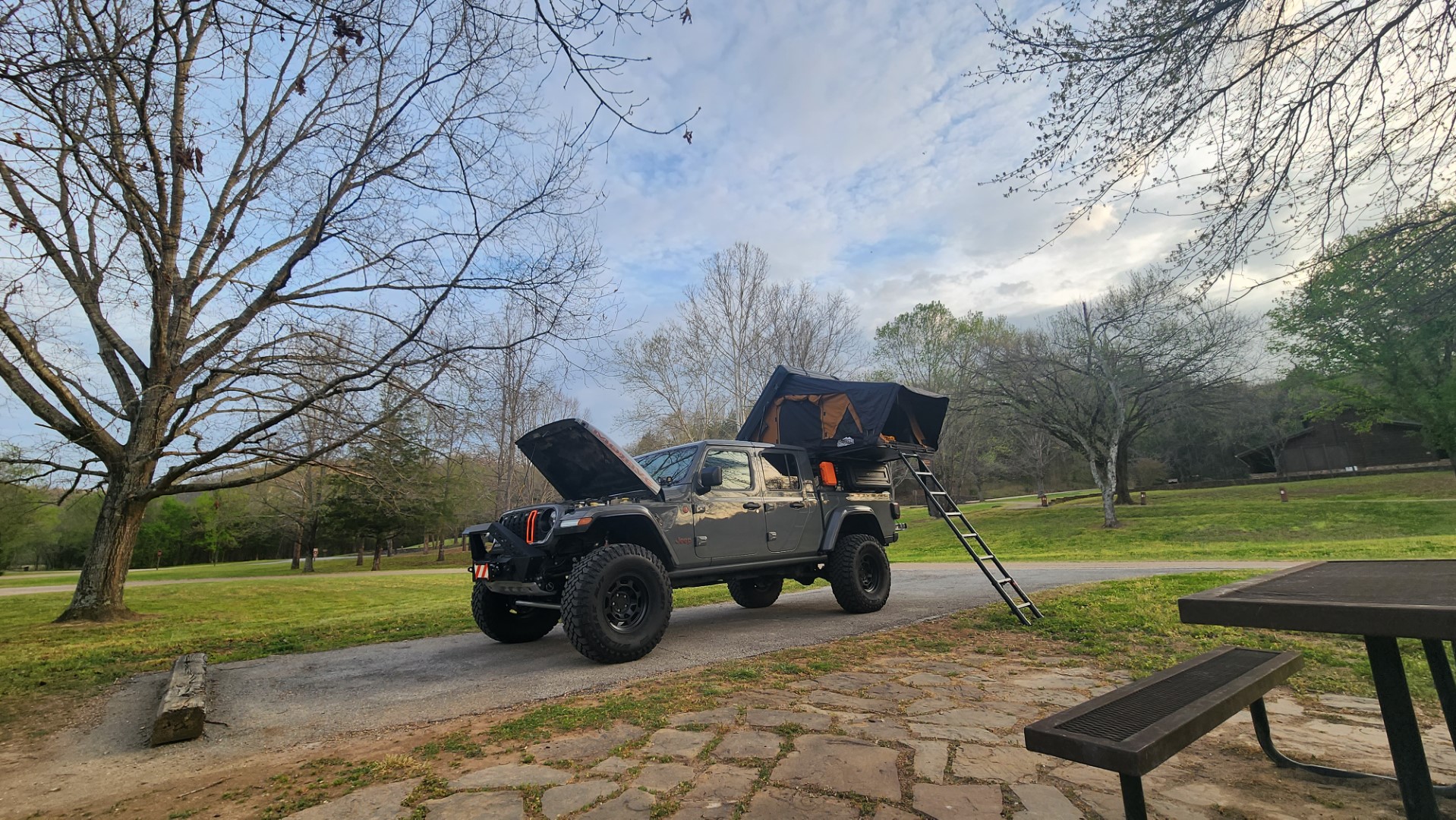
The Xtrusion Overland bed rack and Alto Mini roof top tent support quick camp setup while keeping the build useful for travel.
Starlink Mini is mounted behind the rear passenger area with a 3D printed interior mount, with Autolynx sway-bar disconnects, a 50-inch light bar, rear chase lighting, and surrounding trail lighting.
Gallery
Field notes, details, and build moments
Currently in the Works
The active phase is the custom Fab9 axle conversion
This is the largest current step in the project. Custom Fab9 axles are planned for the front and rear, with the configuration being developed around the long-term shape of the Jeep and its current 38-inch tire setup. Project status language will stay simple: Planning, Parts Ordered, In Progress, and Completed.
Planning
Custom Fab9 front and rear axles
The axle build now centers on custom Fab9 assemblies front and rear. Final specifications will be coordinated with the larger tire goal, steering, brakes, suspension, and future drivetrain plans.
Planning
40-inch tire and beadlock wheel setup
The tire and wheel project is being coordinated with axle width, bolt pattern, backspacing, steering load, braking, and future drivetrain plans.
Planning
Hydraulic-assist steering
PSC heavy-duty / Big Bore steering systems are the leading direction, because the steering system needs to match the custom Fab9 front axle and larger tire goal.
Planning
Driveshaft and drivetrain support
New front and rear driveshafts will need to be coordinated with the axle installation, suspension geometry, ride height, yokes, and the future engine direction.
Axle Project
Custom Fab9 axles, front and rear
The custom axle conversion is about mechanical margin. The factory drivetrain can work well within its intended envelope, but this project is moving toward larger tires, heavier carried equipment, more steering load, and eventually more power. The final Fab9 specifications are still being developed.
Custom Fab9 front axle assembly
- Axle width and suspension mounting points to be finalized
- Shaft, housing, and locker specifications to be confirmed
- Steering layout coordinated with hydraulic assist
- Brake and hub fitment coordinated with wheel choice
- Front driveshaft and yoke specifications to be confirmed
Custom Fab9 rear axle assembly
- Axle width and suspension mounting points to be finalized
- Shaft, housing, and locker specifications to be confirmed
- Brake and hub fitment coordinated with wheel choice
- Rear driveshaft and yoke specifications to be confirmed
- Parking brake integration to be worked into the final assembly
Gearing to suit the Fab9 build
The earlier 5.38 gearing target will be revisited for the custom Fab9 configuration. Final gearing will be considered alongside tire size, street drivability, crawl control, transmission behavior, and the later powertrain phase.
Tires and Wheels
Building toward 40-inch tires without skipping the support work
The tire project is not just about a larger sidewall and more clearance. It affects axle strength, steering, brakes, gearing, wheel choice, scrub radius, spare management, and how the Jeep behaves on pavement between trail days.
40-inch tire target
The Jeep is currently on 38-inch tires, with the next tire phase aimed around the supporting systems needed for a reliable 40-inch setup.
True beadlocks
The wheel search is focused on functional off-road beadlock wheels, not simulated beadlock styling.
Bolt pattern and axle width
The earlier 8x6.5 bolt-pattern target will be checked against the final Fab9 hub configuration. Wheel backspacing will be selected to suit the confirmed axle width and steering clearance.
20-inch wheel consideration
An approximately 20-inch wheel diameter is currently being considered for the 40-inch tire setup.
Wheel finish
The current preference is a black wheel finish with a raw or silver metal beadlock ring.
Conventional balancing
The plan is to conventionally balance the wheels with wheel weights rather than treating balance beads as the preferred solution.
System fit
The wheel and tire choice has to work with steering clearance, axle width, road manners, trail use, and long-distance travel.
Spare tire planning
The larger tire setup also has to account for spare mounting, carried weight, access, and how the Jeep is loaded for longer trips.
Steering, Driveshafts, and Drivetrain Support
The supporting systems have to be engineered together
The Jeep is headed toward more tire, more axle, more carried weight, and eventually more engine. That means steering and driveline choices cannot be treated as afterthoughts.
PSC is the leading steering direction
Hydraulic-assist steering is planned as part of engineering the Jeep around the custom Fab9 front axle and larger tire direction. The steering layout will be developed with the final axle assembly to support control and durability.
Front and rear shafts will change with the axles
Front and rear yoke specifications will be confirmed with the custom Fab9 assemblies. Tom Wood's driveshaft planning needs to line up with those connections, suspension geometry, ride height, axle installation, and future drivetrain plans.
GM V8-based conversion later
The current direction is a GM V8-based powertrain, but the exact engine has not been finalized. The axle, gearing, steering, tire, wheel, driveshaft, and braking decisions are being made with that later phase in mind.
Completed and Current Modifications
What already shapes how the Jeep is used
These details matter because they describe the real operating weight and use case. The build already carries camping, recovery, lighting, connectivity, comfort, and trail-control equipment that affects every future decision.
Suspension and Tires
Rock Krawler 3.5-inch suspension with the rear Y-link style setup and current 38-inch tires.
Steering and Joints
Autolynx sway-bar disconnect system and American Iron ball joint deletes are part of the current chassis setup.
Connectivity
Starlink Mini mounted behind the rear passenger area inside the Jeep using a 3D printed mount.
Bed Rack with Roof Top Tent
Xtrusion Overland bed rack with an Alto Mini roof top tent for the camping and travel side of the project.
Lighting
50-inch light bar, rear chase lighting, and additional surrounding lights support travel, camp, and trail visibility.
Gear Carried
Emergency medical kit, cooking gear, recovery gear, and a vehicle detailing kit are part of the typical carried setup.
Project Journal
Recent direction and working notes
The build direction moved beyond incremental factory upgrades
The axle conversion is being planned because replacing one weak link at a time stops making sense once the long-term tire, load, and engine goals are clear.
The Jeep still needs to remain a real road-trip vehicle
The planned cross-country route from Louisiana toward the West Coast, north toward Oregon, across toward Pennsylvania, and eventually back to Louisiana is a key test before the later GM V8 phase.
Parts are being evaluated as systems
Axles, gearing, steering, driveshafts, wheels, tires, brakes, suspension geometry, and payload all influence each other. The build journal is moving toward documenting those tradeoffs more clearly.
Project Audio
The Sidney Vega Radio Network
I keep a playlist in the Jeep for the project. These are the sound bites that go with it: safety notes, emergency cues, and short radio-style bumpers built to sit between tracks, moments, and field notes.
Safety Audio
Emergency Stop
Final Departure
Bumper 1
Radio Bumpers
A radio bumper is a short audio transition used between segments, announcements, or breaks. It helps identify the station or project, set the tone, and keep the listener oriented before the next piece begins.
Bumper 2
Bumper 3
Bumper 4
Bumper 5
Bumper 6
Bumper 7
Bumper 8
Bumper 9
Bumper 10
Bumper 11
Lessons Learned
What the project keeps reinforcing
Payload changes everything
- Permanent bed weight affects suspension behavior, tire choice, braking confidence, and how the Jeep feels on long drives.
- A part that works on an empty Jeep may not be the right answer for a loaded travel setup.
Strength needs context
- The goal is not simply bigger components; it is enough mechanical margin for the way the Jeep will actually be used.
- Serviceability and road manners still matter because this is not a trailer-only trail vehicle.
Do the supporting work first
- The axle, steering, wheel, tire, driveshaft, and braking decisions are being made before the eventual engine conversion.
- That order should reduce the cycle of upgrading parts that were already destined to be replaced.
Plan around the whole system
- Axles, gears, tires, wheels, steering, brakes, and driveshafts all affect each other once the Jeep is loaded for travel.
- Choosing parts together keeps the build more predictable than solving one weak point at a time.